The Canonical Guide
to Selling to Home Services

What You'll Find Inside

Ninety-nine percent (99%) of B2B GTM advice only applies to buyers who are on LinkedIn, respond to emails, and work at companies ZoomInfo can crawl.

An HVAC company owner uses talk to text on a phone while driving a truck, they’re not doomscrolling LinkedIn at a desk. The playbook that works for selling to tech companies fails systematically for home services.

We sourced the insights for this guide from a mix of public data, our proprietary database, customer conversations, and expert interviews: analyzing 1.74 million accounts, synthesizing 130+ case studies, and reviewing hundreds of hours of sales call transcripts.

Our panel of expert consultants includes the CFO of one of the largest home services PE platforms, an SVP of the largest tech company in the industry, and many sales leaders from industry juggernauts and hyper-growth AI startups.

Key Stats That Matter
Stat
What it means
Section
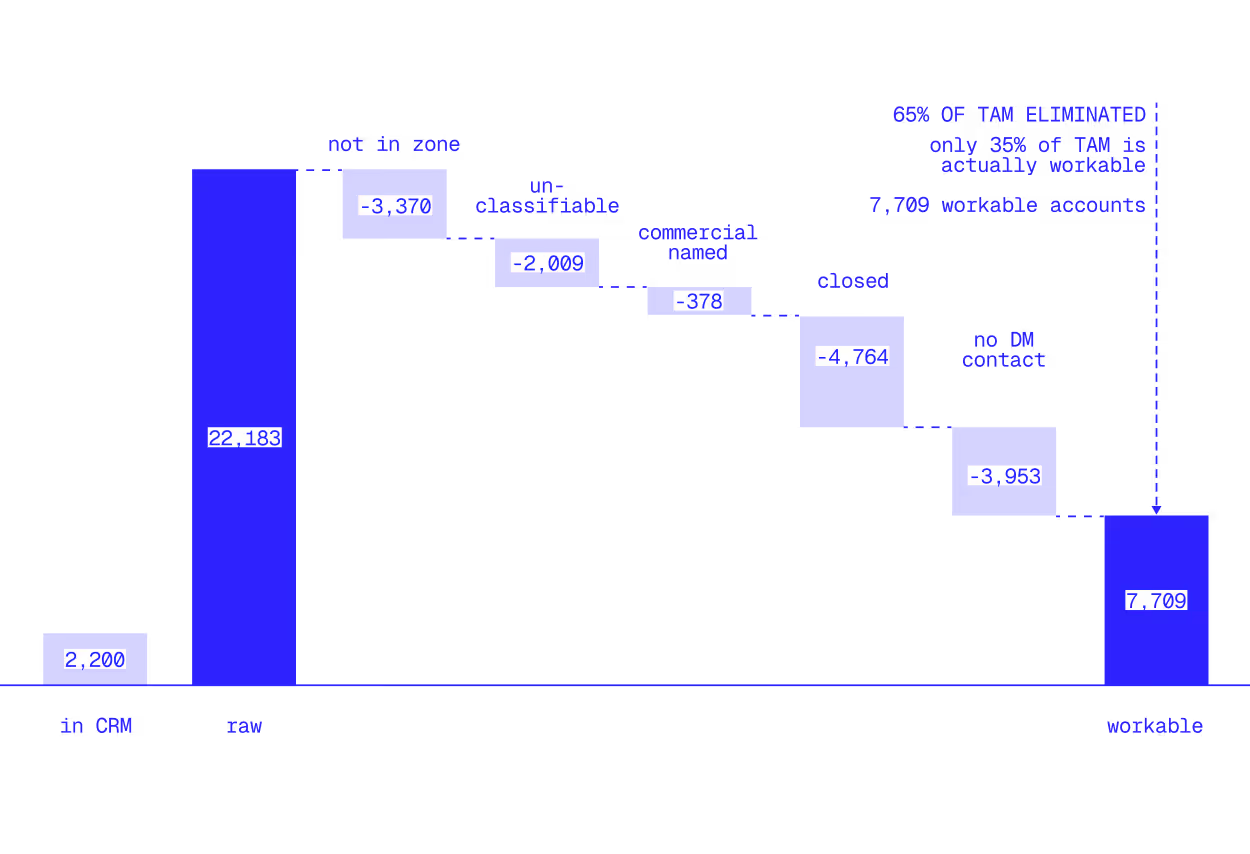
22,183 --> 7,709
What your TAM looks like after filtering on commercial vs residential, PE hierarchies, and key signals (65% of "accounts" shouldn’t be worked)
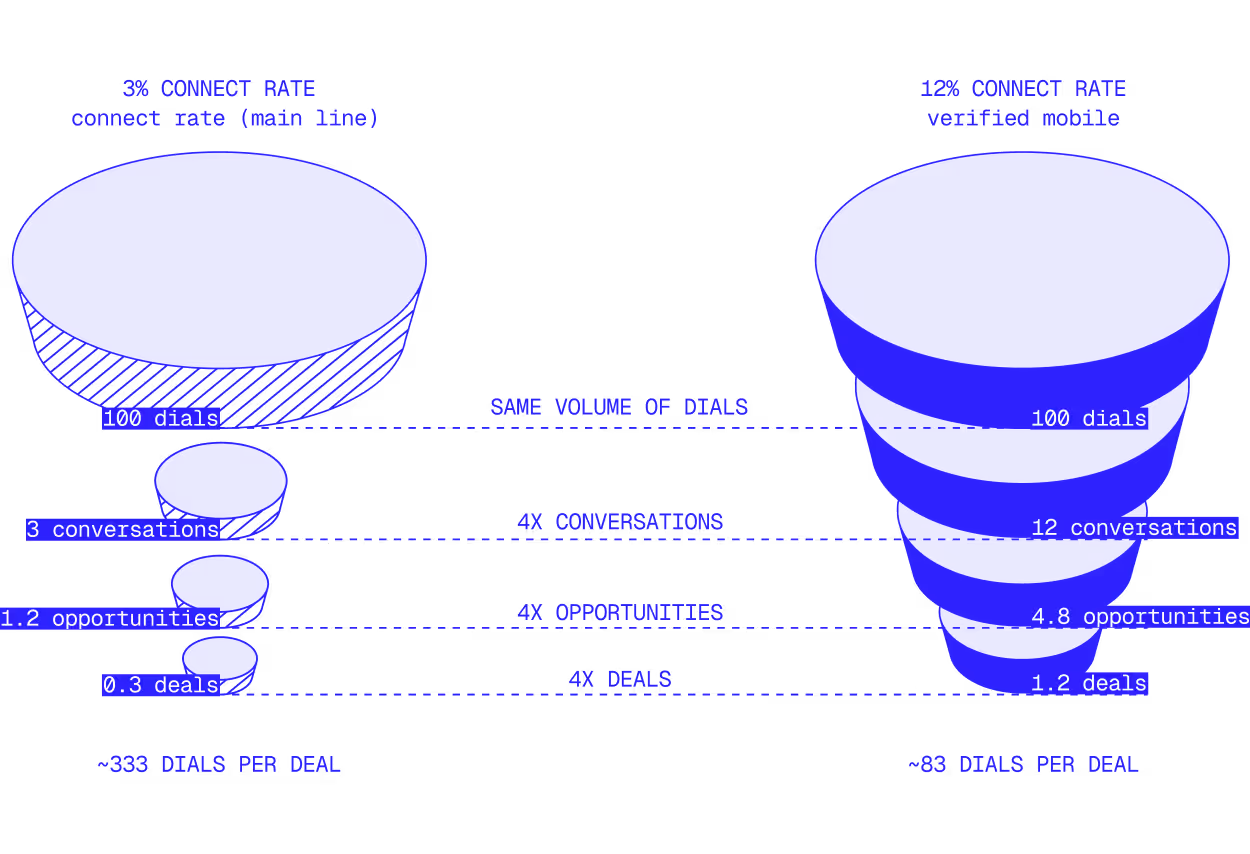
3.0% --> 10.5%
DM connect rate improvement from switching to verified mobile data (3.5x more daily DM conversations with professional operators)
$3K–$12K vs. $50K–$500K+
ACV range for independent operators vs. PE-backed holding companies (same industry, 50x range)
12% customer growth; 26% revenue growth
ServiceTitan's expansion revenue outpaces new logos (the layer cake model is the real economics story)

The Three Gaps Framework
Traditional B2B GTM fails for home services fails across three dimensions. Most teams focus on #3 but ignore #1 and #2:

Your GTM reality structurally cannot support your growth targets.

Start here →

You’re calling accounts that won’t convert.

Start here →

You have the right accounts but can’t contact them.

Start here →

Section 1.15: The One-Page Diagnostic will help you measure all three gaps in under 2 hours.

If you’re in RevOps / Sales Ops
1.10
/

Territory Design: Why your territories are 65% unworkable, providing a 7-stage cascade to fix this

1.14
/

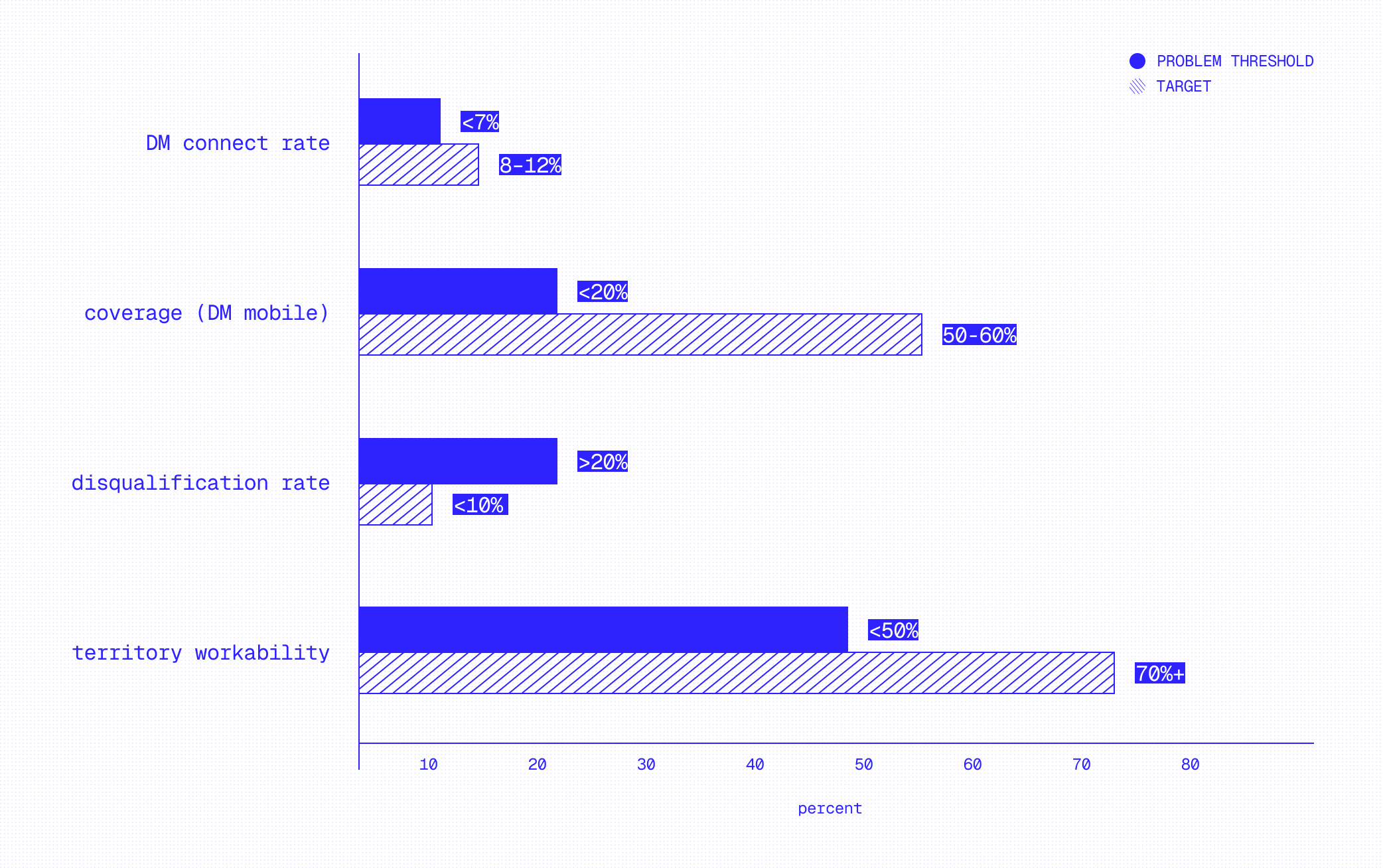
Benchmarks: Target metrics for connect rate, coverage, DQ rate

1.6
/

The Zone Matrix: Why trade label doesn't predict software fit

If you’re a Sales Leader
1.13
/

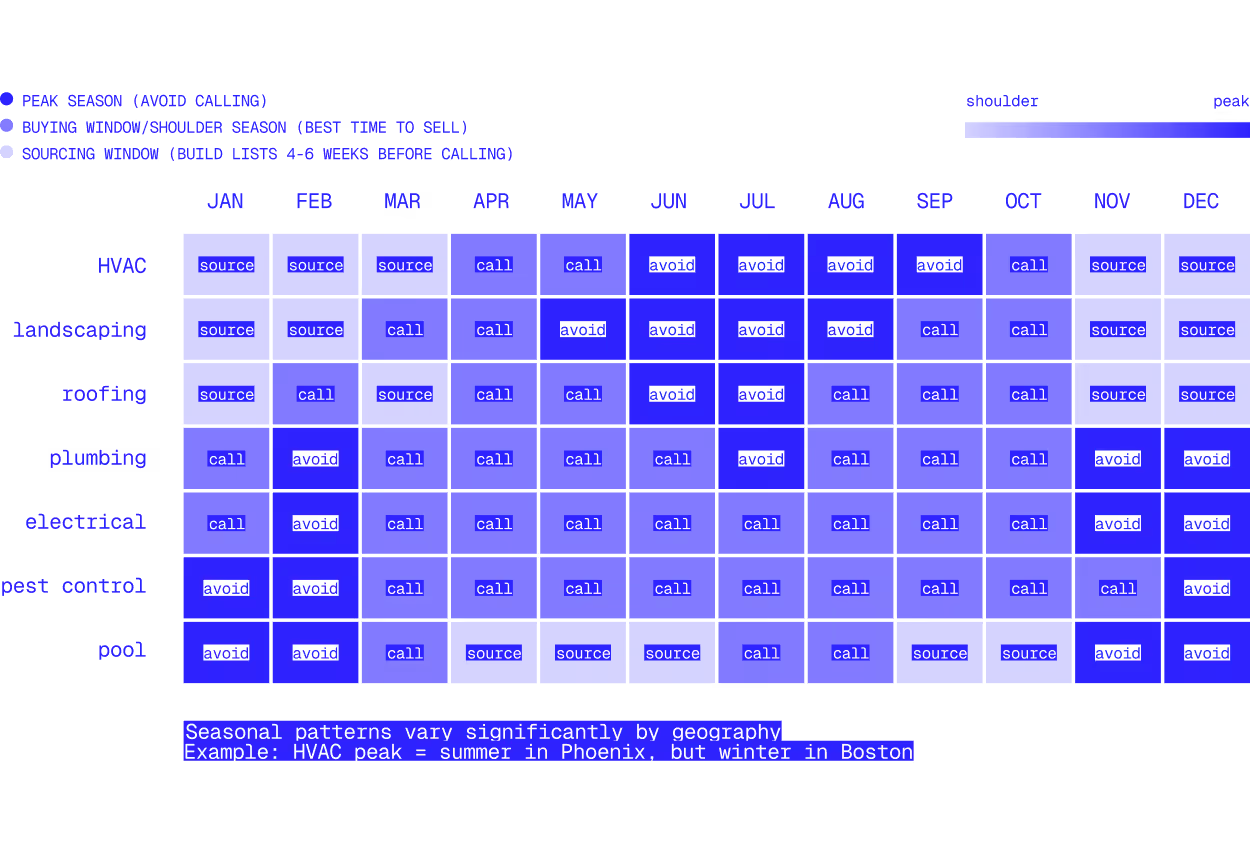
Seasonal Timing: When to source, when to sell, and why a national calendar is wrong for half your territories

1.8
/

Signals: What predicts strong-fit accounts worth pursuing

1.5
/

Compensation Benchmarks: What eight home services companies pay reps, and what they actually earn

If you’re in GTM Strategy / Leadership
1.1
/
1.7
/

The FSM Ecosystem: Three structurally different markets hiding inside "home services"

1.12
/

The PE Roll-Up Layer: A finite, mappable enterprise universe (and why you're running two motions)

If you need to make a case internally
1.15
/

The One-Page Diagnostic: A 2-hour exercise to quantify your gaps with real numbers

1.4
/

The Post-Sale Data Problem: Why expansion revenue dwarfs the initial sale and the same data gaps that break acquisition break retention

Five Insights Worth Reading

Your “TAM” is probably 65% phantom accounts
A Phoenix metro territory with 22,183 accounts becomes 7,709 after filtering for construction companies, the "contractor" gray zone, commercial-only businesses, closed listings, too-small operators, and unreachable contacts.

If you're setting quotas against the raw number, you're setting reps up to fail. Most teams don't run this cascade; they discover it one wasted dial at a time.
Connect rate is the metric that unlocks everything else
Every downstream metric—meetings booked, pipeline generated, deals closed—is bottlenecked by your inability to reach the decision maker. With a 3% connect rate and 70 dials/day, a rep generates ~2 DM conversations daily. At 10.5%, the same rep generates ~7.

One FSM company measured 15% on its first batch of enriched leads, settling to 10.5% at scale. Another large platform measured a 66% increase in DM connect rates across its entire sequence after switching to verified mobile data.
PE Rollups are hidden enterprise accounts that require a different motion
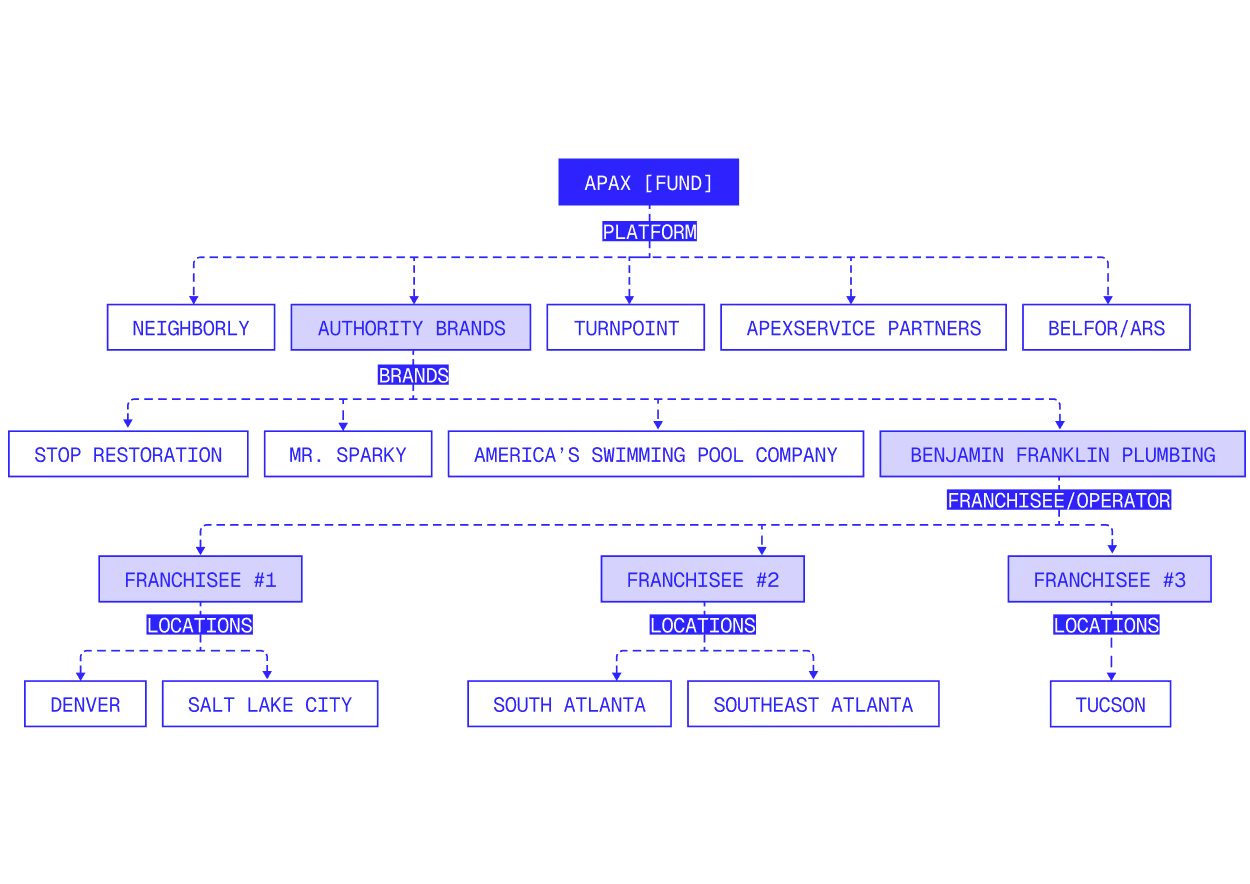
An independent eight-truck plumber buys a $6K subscription. A PE-backed holding company deploying across five brands buys a $500K enterprise contract—same industry, 83x ACV range.

But PE owned accounts are not identifiable on Google Maps, they blend in with every other account in the market. Your team needs to have the hierarchy data available in your CRM, and a deep understanding of how these complex entities think about purchasing and adopting technology.
Trade label doesn't predict software fit; the zone matrix does
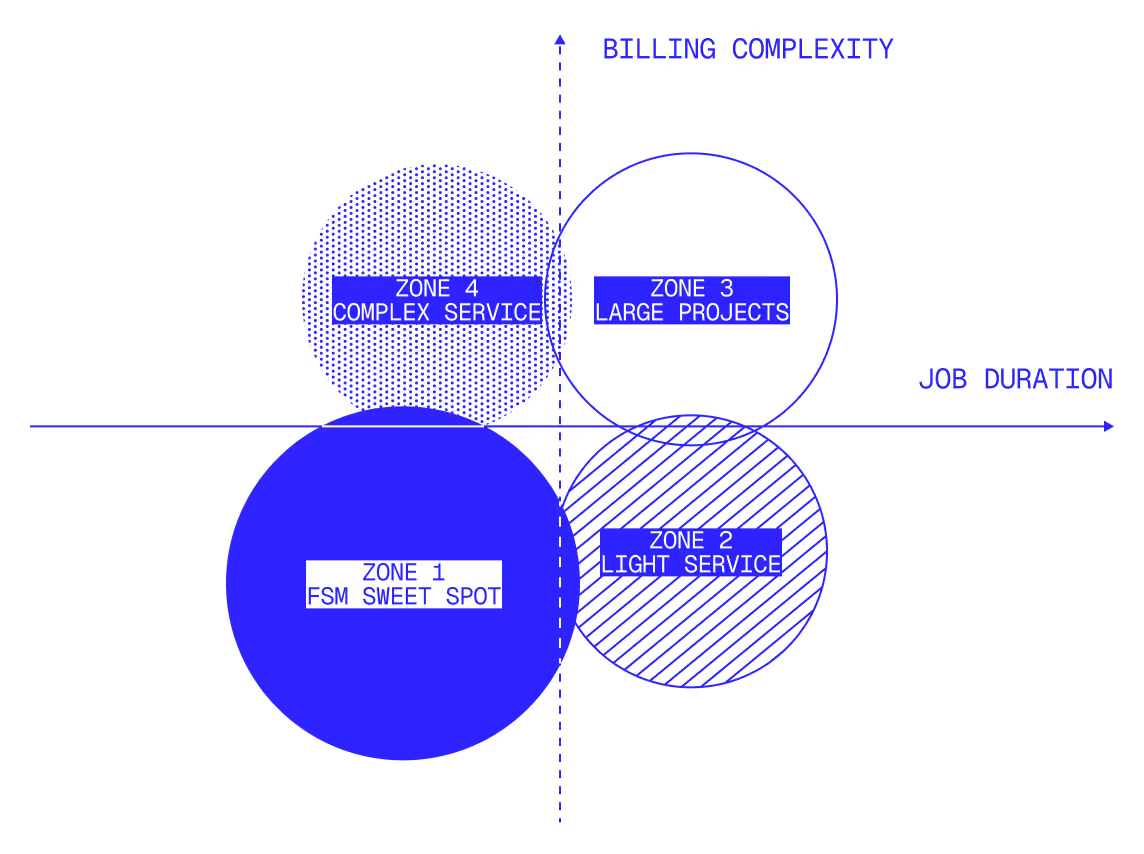
"HVAC contractor" tells you almost nothing about whether a business is a good fit. A HVAC company performing residential air conditioning installations (Zone 1, FSM sweet spot) and one doing six-month mechanical installations (Zone 3, project management), for example, look the same in your CRM.

The zone matrix (job duration x billing complexity) predicts software fit better than trade or residential/commercial labels.
Volume still wins, but seasonal timing determines where to point it
Home services outbound is still a mass-calling motion. Reps need 80+ dials per day to hit targets, with no shortcuts around this volume. Seasonal timing changes which accounts absorb that volume and when.

The core paradox: pain surfaces during peak season (when HVAC systems break in July), but purchases happen during shoulder season (when the owner has enough bandwidth to evaluate software). The fix isn't fewer dials but instead a smarter rotation: source leads during peak, sell during shoulder, and cycle leads based on their trade in and out of the active pool.

How to Use This Guide

If you have 15 minutes

Read the Five Insights above.

If you're building
a business case

Read Benchmarks to understand what you should aim for, then run the Diagnostic to evaluate where you stand.

If you’re looking
to move up market
Quick Reference: Benchmarks
This guide is based on patterns emerging from working with GTM teams at companies selling to home services operators across HVAC, plumbing, electrical, roofing, pest control, and a dozen other trades: 3 million+ accounts analyzed, 130+ case studies synthesized, and hundreds of hours of sales call transcripts reviewed.

Full benchmarks with context: Section 1.14 Home Services GTM Benchmarks